
Reconciling with Ecological Grief
If you are invested in ecological gardening or restoration, you’re familiar with the feeling of joy—the pleasure of watching native wildflowers bloom where once they were absent, for example, or the thrill of seeing a new bird or bee in your gardens because you’ve created habitat.
You are also, most likely, familiar with sadness. These days, to love the earth is to know grief.
Those of us who care for the earth find ourselves contending with the pain of countless losses. Loss of habitat. Loss of the wildflowers and wild creatures who would otherwise make these natural habitats their home. Loss of humans’ relationship with land and the opportunities that more symbiotic relationships would reveal. Loss of beauty. Loss of outdoor recreational opportunities. Loss of clean air and water for humans and wildlife. Loss of biodiversity and ecosystem resilience. Loss of flora and fauna that we never knew existed, and now never will. The list goes on…
Grief over the degradation of our earth is so widespread, there’s an official term for it: Ecological Grief. We’ll explore what this concept entails below. The intensity of this grief is vast and valid.
Perhaps counterintuitively, the presence of Ecological Grief points us toward its antidote. After all, the depth of our grief is a direct reflection of the depth of our love for the earth. Sustaining that love through close relationship with land can provide a remedy for our sadness.
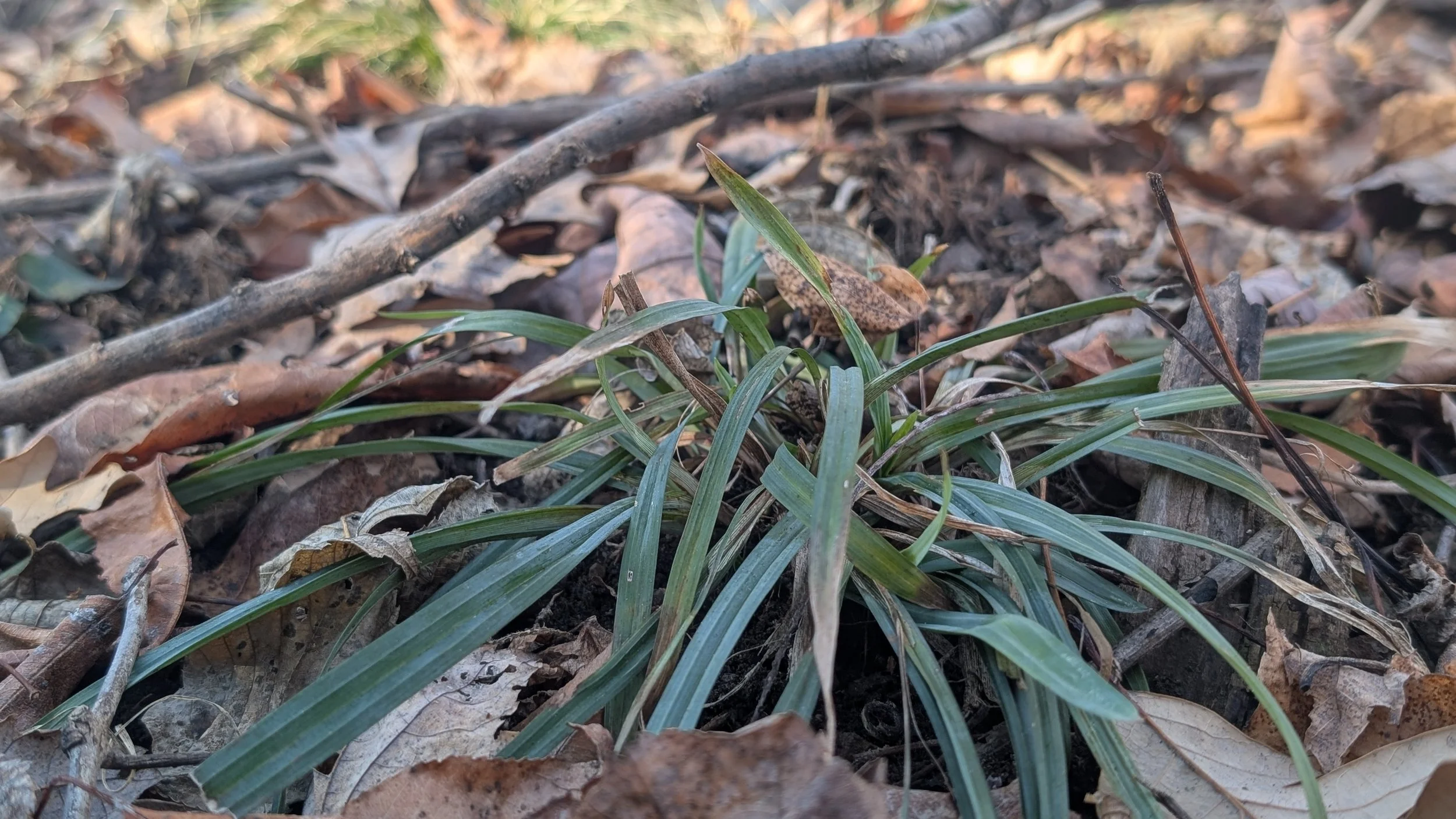
An ecological joy: finding this native sedge growing from a restoration site at the Horn Farm in York, PA.
What is Ecological Grief?
A 2021 paper published in the International Journal of Environmental Research and Public Health broadly defined Ecological Grief as “a natural response to ecological loss, which is supposedly particularly pronounced in people who retain close relationships with the natural environment… but may well be universal.”
More specifically, the authors cite two other researchers who define Ecological Grief as “the grief felt in relation to experienced or anticipated ecological losses, including the loss of species, ecosystems, and meaningful landscapes due to acute or chronic environmental change”. This loss might also include loss of human ways of life and even “loss of personal identity constructed in relation to the physical environment.”
Ecological Grief also is referred to as “climate anxiety,” “eco-grief,” or “solastalgia.” No matter what you call it, you are probably familiar with how this grief feels in your body and mind.
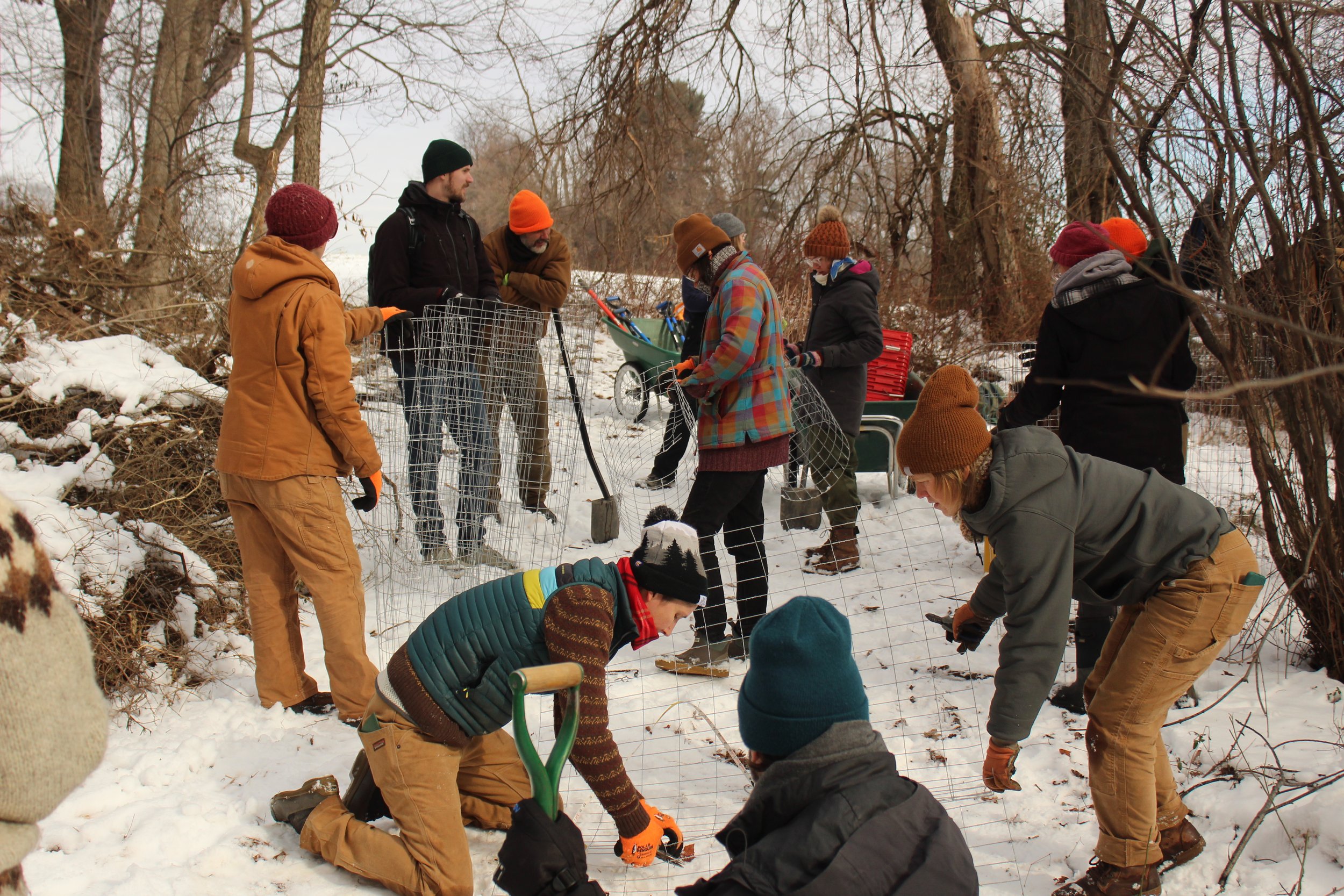
An ecological joy: building community among earth stewards as part of 2025’s Ecological Restoration Certificate (ERC) program.
An Antidote to Grief: Developing a Relational Ethos with Land
Ecological Grief can feel so “big”—like a huge, nebulous force pushing down on us. If left unaddressed, the weight of this grief can threaten our motivation to continue advocating for and taking action on behalf of our ecosystems.
Sustaining a close relationship with land helps counterbalance Ecological Grief, because it offers grounding in the love that undergirds this relationship—and love is a renewable resource.
Furthermore, when we connect deeply with a specific plot of land, ecological challenges and opportunities come into focus. Through close observation, we identify ways in which we might be of service to the land. Taking concrete action is empowering, as it allows you to experience your own capacity for impact. This helps reduce the sense of overwhelm that can arise when thinking about ecological destruction more broadly. As one Rutgers professor puts it, “Action is the best medicine.”
Below are three strategies for deepening your relationship with land. We teach these strategies in many of our educational offerings.
Sit Spots
A sit spot is a place in nature that you visit regularly to practice observation and connection with the land. As the name implies, the goal is simply to sit in a consistent spot and observe quietly.
Returning to the same spot across different days, times of day, and seasons deepens your relationship with that specific place. It provides opportunities to familiarize yourself with changes in the space over time, from shifts in wildlife behavior to the influence of different weather patterns.
Because of its emphasis on mindfulness, a sit spot practice helps cultivate a sense of calm in an ever-changing world. This effect can be amplified by incorporating meditation into your sit spot ritual.
Nature Journaling
Nature journaling involves creating a tangible record of your observations, questions, and feelings about a specific place in the natural world. As you notice wildlife, plants, weather patterns, and your own internal state, you might record these observations using a combination of written words, drawings, photos, leaf pressings, and so on.
As with sit spots, nature journaling encourages slowing down, getting present, and practicing close observation and mindful reflection. Creating a record of your experience helps ground you in your observations and allows you to reflect on your experiences well into the future.
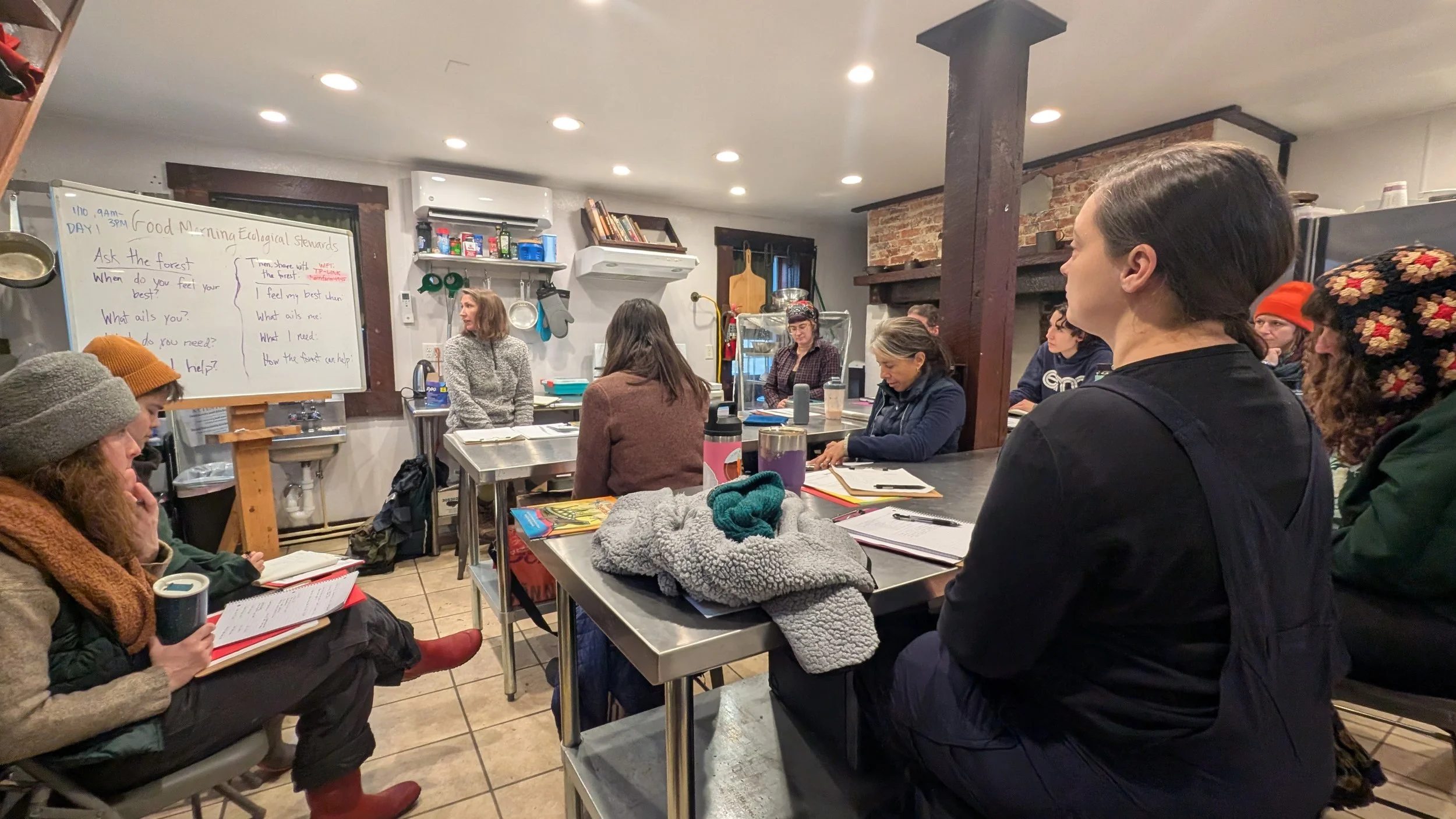
The 2026 cohort of the Ecological Restoration Certificate (ERC) program engages in a creative writing exercise that facilitates dialogue with land.
Dialogue with the Land
Another way to connect with the land around you is simply to talk with it. That might sound odd, but hear us out! This dialogue can take place in different ways.
You might walk through a landscape while paying close attention to cues about where it’s thriving and how it might be ailing. You might sit in nature, enter a meditative state, ask some questions of the land out loud, and see if any responses arise. You might pull out a journal and write down some questions that you have for the land, then respond to those questions as if the land is speaking through you.
There’s no “right” or “wrong” way to approach this dialogue. The point is simply to foster an ethos of listening to the land—inviting the land to be a participant in the process of its own healing. Considering the land as our partner in restoration empowers us to serve as more mindful earth stewards.
Connecting with land can have a rejuvenating effect that strengthens your resilience as you engage in ecological action. When we show up in service to the earth, we find the motivation to continue moving through our Ecological Grief, rooted in love and the restorative fuel that it provides.
Words Shared by Laura Newcomer