

Ecological Restoration Services
Create compassionate change for regional ecosystems and wildlife. Make a difference that persists for generations.
Ecological Restoration involves assisting damaged or degraded ecosystems to reach their highest level of recovery possible. We align our approach with worldwide Ecological and Social Benefits standards as defined by the Society for Ecological Restoration.
This process includes:
Assessing your space to match it to its reference landscape—a nearby habitat community (public preserve, etc.) that is a model of the potential health and vitality of your space
Referencing the native plant communities that match your site via ecological data resources such as the Pennsylvania Natural Heritage Program
Identifying and observing existing populations of highly valuable plant populations
Working with hydrology and other existing energy flows on site
Manually removing invasive plants that have crowded out indigenous/native plant species, unearthing ecological memory
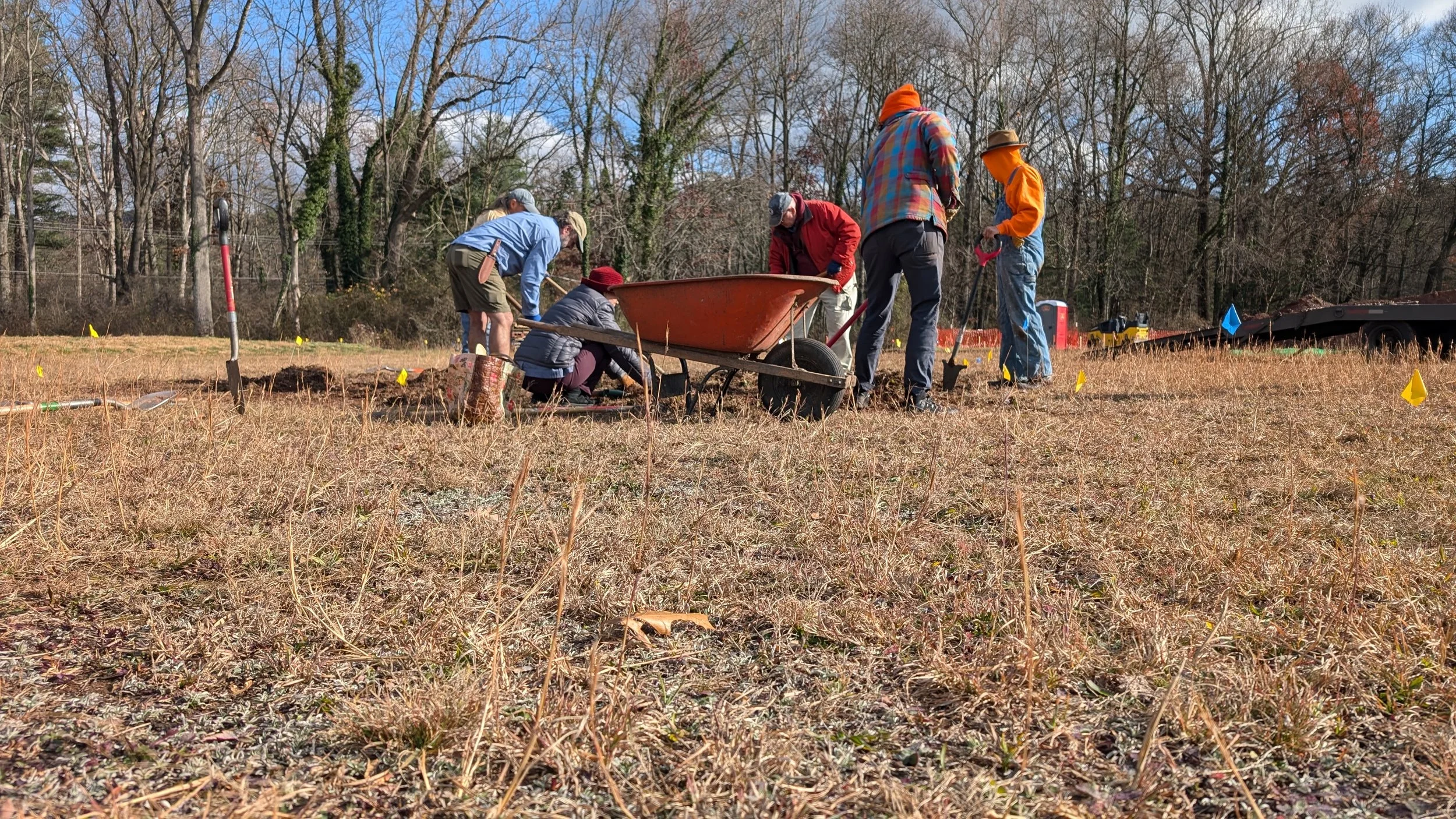
Planting and/or seeding local ecotype native species that are likely to thrive in your ecosystem, accelerating their return
Ongoing non-toxic stewardship to support ecological recovery


EMBRACING NON-TOXIC RESTORATION
With the well-being of you, your children, grandchildren, pets, resident wildlife, soils, and the watershed in mind, we are committed to a 100% non-toxic approach to restoration.
We do not use herbicides, opting instead for mechanical removal methods and allyship with native plants that exhibit unique characteristics to help out-compete or ‘hold a candle’ to introduced species including bush honeysuckle, multiflora rose, English ivy, privet, archangel, and more.
Our chosen path of Ecological Restoration, as inspired by indigenous practice, is a wisdom-based approach, rather than a warfare with chemicals. This heart-centered, mindful process often entails a longer-term commitment than Ecological Gardening projects. We invite you to learn more about this process and see sample projects on our blog.
Even ecosystems that seem to have ecological amnesia have potential. If you are seeking to make a large-scale impact on behalf of land and plants, wildlife, and humans, we invite you to contact us to begin collaborating on your project.
DID YOU KNOW… ?
Habitat loss is a big deal. Approximately 1/4 of the world’s plant and animal species are threatened with extinction, largely due to habitat loss. This significantly reduces biodiversity, which is vital for maintaining functional ecosystems. Source: Intergovernmental Science-Policy Platform on Biodiversity and Ecosystem Services
Ecosystem degradation affects people, too. The well-being of an estimated 3.2 billion people, or approximately 40% of the world’s population, is harmed by ecosystem degradation. All life on Earth relies on healthy, functional, and resilient ecosystems. Source: UN Environment Programme
Restoration makes a difference! Research suggests that restoring even 15% of ecosystems in priority areas can enhance habitats and reduce extinctions by 60%. Source: UN Environment Programme
Ecological recovery and social benefits go hand in hand. We model our restoration practices after the global standards set by the Society for Ecological Restoration, which emphasize a broad range of ecological enhancements (such as habitat resilience, biodiversity, nutrient cycling, and indigenous plants) as well as social benefits (such as knowledge enrichment, cultural conservation, healthy spaces, and community well-being). You can learn more about these standards here.
VOICES FROM OUR COMMUNITY
“Elyse and the members of her team feel deeply about the importance of their mission to create beneficial habitats for wildlife. That care is evident in everything they do, from the tools they use, to the thought that is given to plant selection, and the attention they give to detail in planting and maintenance.
My favorite part of the process is planting new areas and experiencing the joy that these beautified spaces bring as they fill in.
I cannot begin to thank you for your role in our stewardship of this property. It was always my intention to make the woods more rich in native biodiversity but we would not have known where to start without you. And I know that the co-stewardship plays a big role in how much we have achieved. Every time we work together I feel more deeply committed to my intention to create an environment that supports as much wildlife as possible.”
— Steph (Lancaster, PA)
